Beautiful Plants For Your Interior
Learn how self-watering pots work, which plants suit them and how to use the reservoir correctly in Pakistani weather.
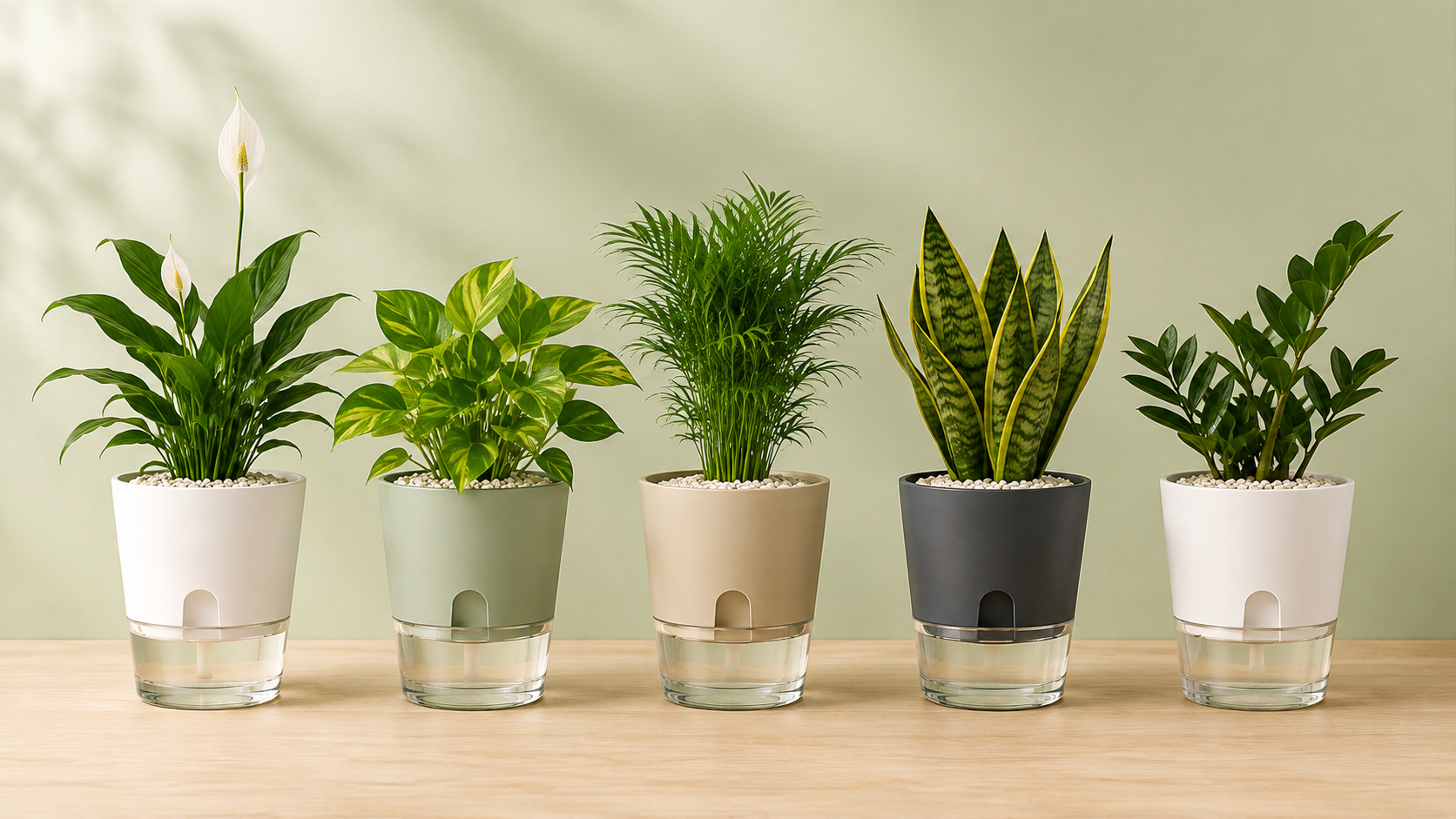
Self-watering pots use a separate water reservoir and capillary action to supply moisture to the root zone. They can make plant care more consistent, but they are not automatic forever: the mix, wick, plant type and reservoir level still need checking.
Water sits below the growing container rather than flooding the entire pot. A wick or contact point carries moisture upward. Roots use that moisture gradually, which can reduce rapid wet-dry swings and make desk plants easier to maintain.
Money Plant, Peace Lily, Syngonium and many Aglaonema varieties appreciate relatively even moisture. Snake Plant and ZZ Plant can also be used when the mix is very airy and the reservoir is allowed to empty between refills.
Filling the reservoir while the top mix is already saturated is the most common problem. Heavy soil can stay wet and smell sour. Another mistake is assuming the water-level window replaces plant observation; always check leaves, mix and roots.
Rinse the reservoir periodically, remove mineral residue and keep the fill opening clean. If roots grow excessively into the reservoir, trim only when necessary during repotting. Confirm that the wick still makes contact after changing the mix.
It depends on plant size, light, temperature and reservoir capacity; check the level rather than using a fixed date.
Yes, if the mix is dense, the reservoir is constantly full or the plant prefers drier roots.
Yes, because the visible reservoir and steadier moisture simplify routine care.
Explore indoor plants, compare plant combos or ask for help on WhatsApp.