Beautiful Plants For Your Interior
Learn when and how to water indoor plants in Pakistan without causing root rot, yellow leaves or dry soil problems.
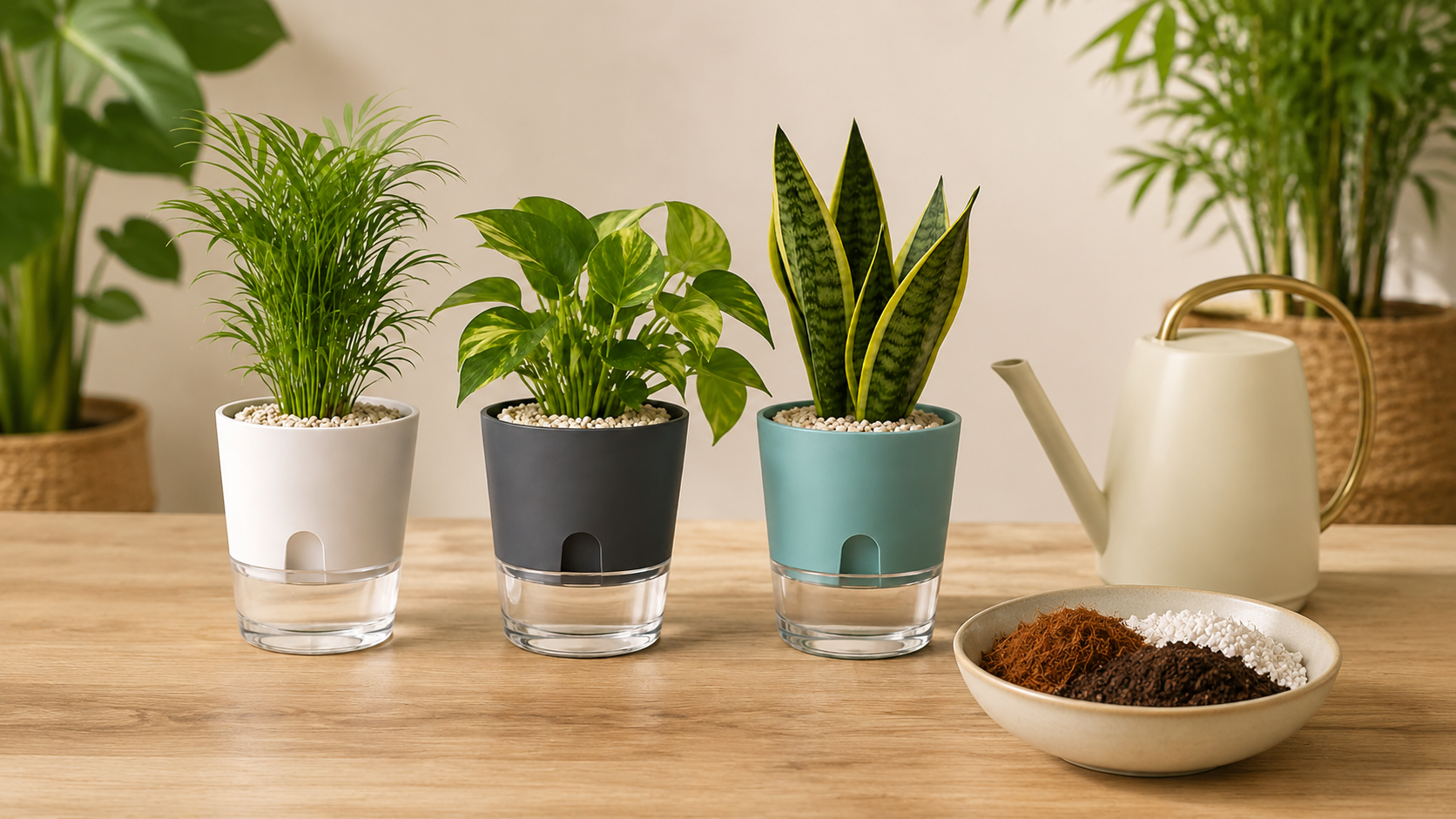
Most indoor plants are harmed by watering too often, not by one slightly late watering. Pakistan's seasons change evaporation dramatically, so the safest method is to check the potting mix and plant condition instead of following a fixed weekly schedule.
Insert a finger into the upper mix. If it feels cool and damp, wait. You can also lift a small pot after watering and again when dry; the weight difference quickly teaches you when moisture has reduced. Moisture meters can help, but they should not replace observation.
For a drainage pot, pour slowly across the surface until a little water exits below, then empty the saucer. For a self-watering pot, water from the top during establishment, then use the reservoir according to the pot design. Do not keep the reservoir permanently full if the mix is already wet.
Yellowing leaves, a sour smell, fungus gnats and soft dark stems are common warnings. Pause watering, improve airflow and inspect drainage. Severe root rot may require removing damaged roots and repotting in fresh, airy mix.
Dry light mix, drooping leaves and crispy edges can indicate thirst, although heat and root problems can look similar. Rehydrate gradually; a very dry peat-based mix may repel water and need a slow second watering after several minutes.
There is no universal schedule; check soil moisture, light, pot size and season.
Usually yes, although sensitive plants may benefit from filtered water if local tap water is very hard.
Misting is rarely necessary and does not replace correct root watering or useful room humidity.
Explore indoor plants, compare plant combos or ask for help on WhatsApp.