Beautiful Plants For Your Interior
Repot indoor plants safely with this step-by-step guide to pot size, root inspection, fresh mix and aftercare.
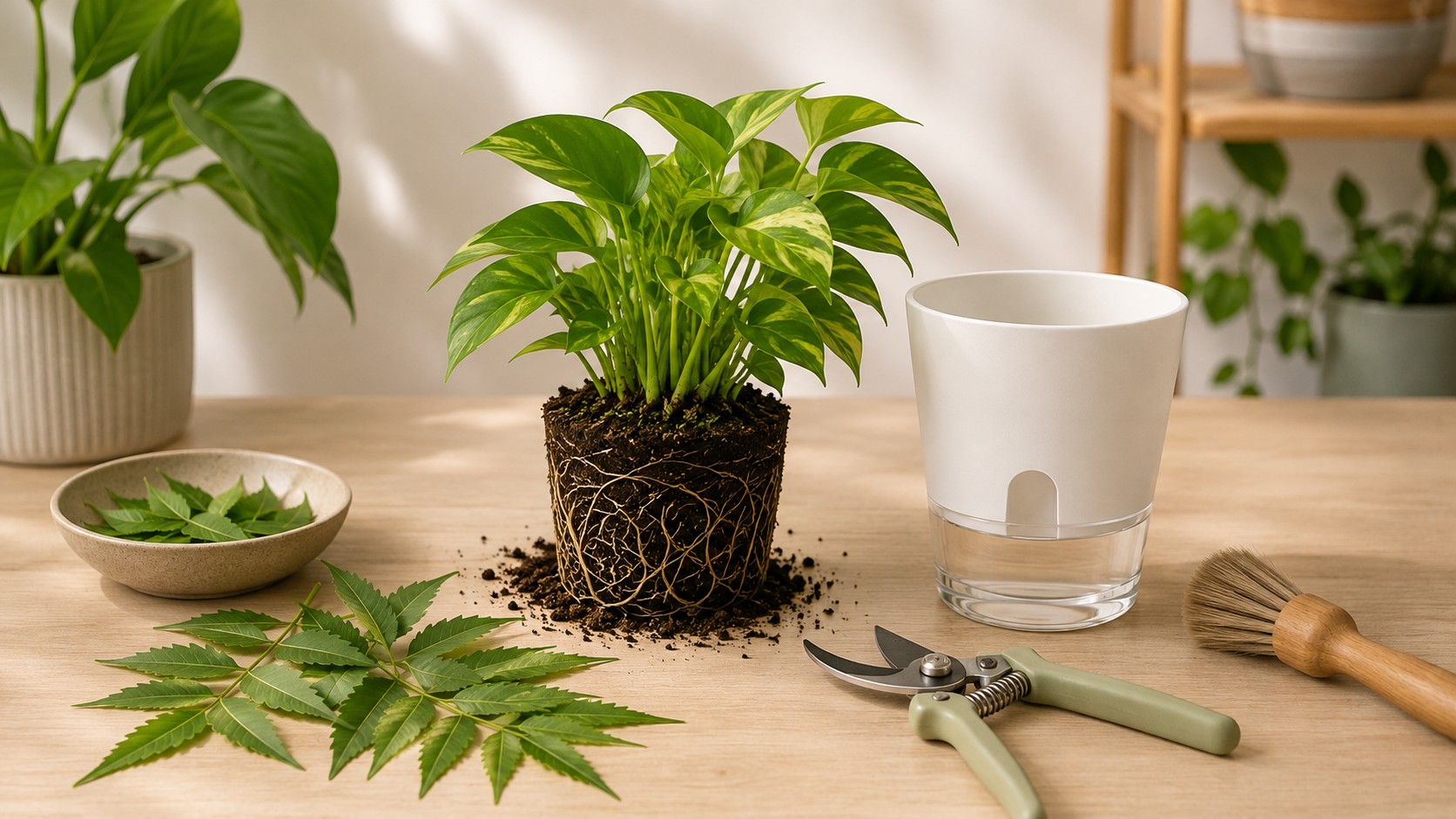
Repotting gives crowded roots fresh space and replaces broken-down mix, but unnecessary repotting can stress a healthy plant. Check for clear signs first and prepare the new pot before disturbing the root ball.
Roots circling heavily, roots emerging from drainage holes, water passing straight through a packed root ball or a top-heavy plant are useful clues. Slow growth alone is not proof, especially in winter or low light.
Select a pot only a few centimetres wider than the current root ball. An oversized pot holds excess wet mix and increases root-rot risk. Confirm drainage or understand the self-watering reservoir before planting.
Water lightly a day before if the mix is extremely dry. Slide the plant out, loosen only tight outer roots and remove rotten black material with clean tools. Add fresh mix, keep the plant at its previous depth and firm gently without crushing air spaces.
Water enough to settle the mix, let excess drain and place the plant in bright indirect light. Avoid strong fertilizer for several weeks. Some temporary drooping is normal, but persistent collapse, smell or rapidly yellowing leaves needs inspection.
Active growing periods are easiest, but urgent root rot should be treated immediately.
Usually no; remove only loose, compacted or unhealthy material unless treating a serious problem.
Let the plant acclimatize first unless the original pot or roots are badly damaged.
Explore indoor plants, compare plant combos or ask for help on WhatsApp.