Beautiful Plants For Your Interior
Make or choose an airy indoor plant potting mix suited to Pakistani weather, common houseplants and self-watering pots.
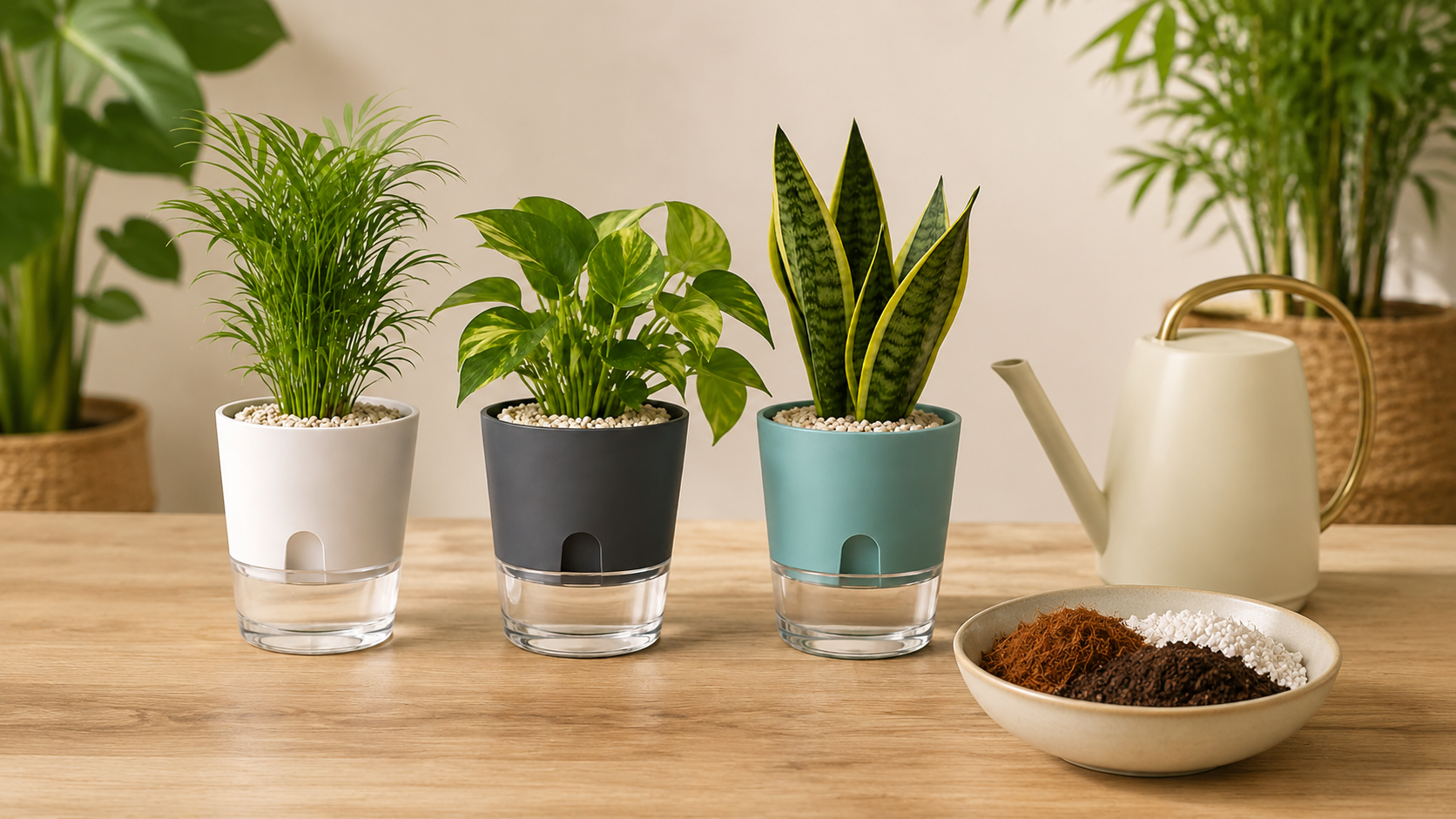
A good potting mix holds enough moisture for roots but also contains air. Dense garden soil often compacts inside containers, especially after repeated watering. Indoor plants usually perform better in a clean, structured mix designed for pots.
A useful starting blend combines quality cocopeat or peat, compost or well-finished organic matter, and an aeration material such as perlite, pumice or coarse bark. Exact ratios vary with climate and species, so judge how quickly the pot dries in your actual room.
Snake Plant, ZZ Plant, Aloe and Jade need a faster-draining blend. Peace Lily, Syngonium and Money Plant appreciate a little more even moisture but still need oxygen around roots. Large palms need structure so the mix does not collapse over time.
Capillary systems need a mix that can wick moisture without becoming muddy. Keep it light and avoid heavy clay. During the first weeks, water from the top to settle the roots; then monitor the reservoir and allow some drying according to the plant.
Replace or refresh mix when it becomes hard, drains very slowly, smells sour or remains waterlogged. White crust can indicate mineral buildup. Do not repot only because the calendar says so; healthy roots and stable drainage are better signals.
Pure garden soil is usually too dense for containers; blend or replace it with a proper potting medium.
No, it benefits from aeration and a balanced nutrient source.
Traditional pots need drainage; self-watering pots need a correctly designed reservoir and suitable mix.
Explore indoor plants, compare plant combos or ask for help on WhatsApp.